Podcast: Play in new window | Download
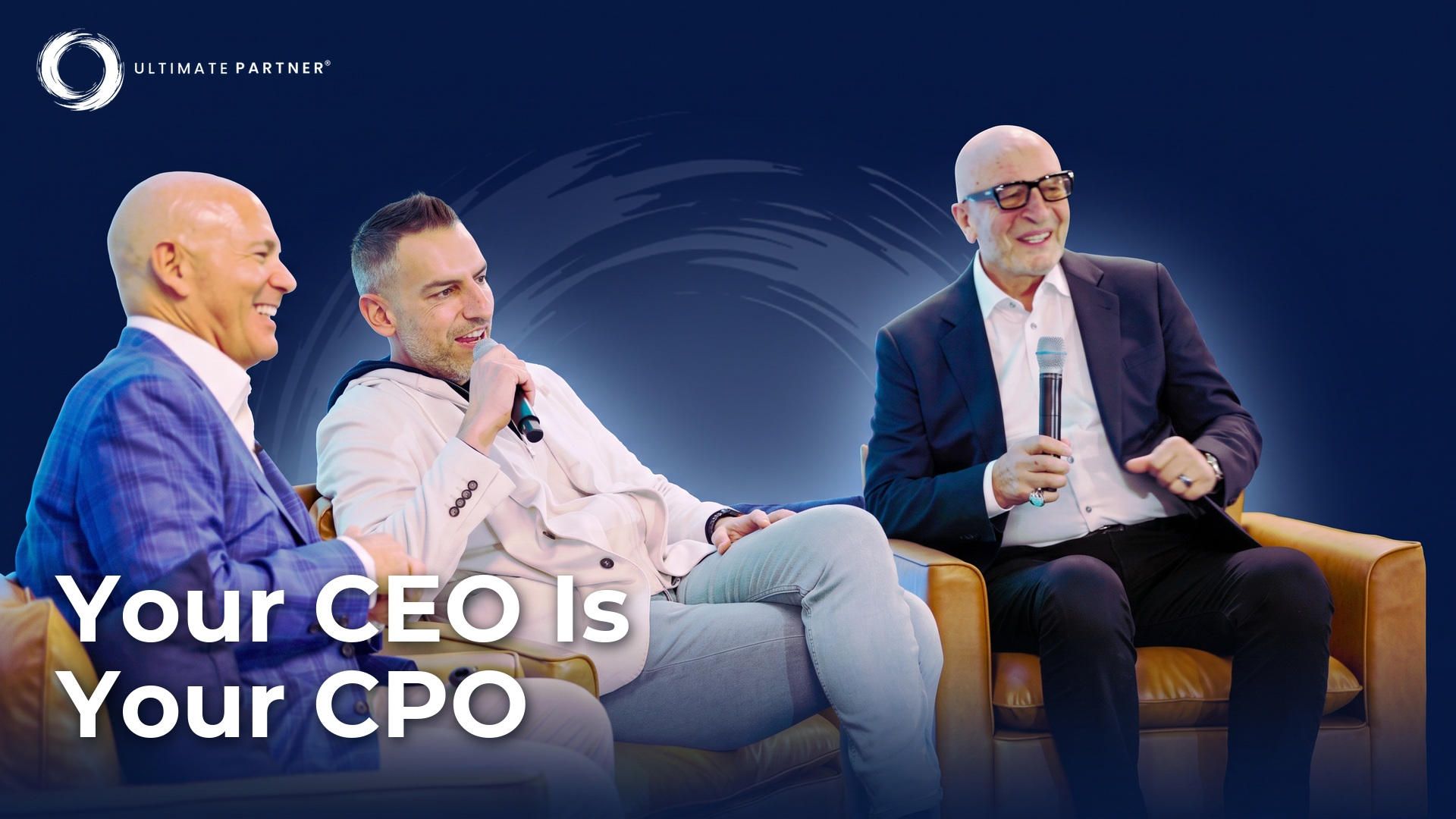
Your top salespeople should make way more than you do.
Subscribe to our Newsletter: https://theultimatepartner.com/ebook-subscribe/ Check Out UPX: https://theultimatepartner.com/experience/
In the rapidly shifting cloud and AI landscape, the most successful partners are those whose leaders treat strategic alliances not as a side department, but as the core driver of business growth. In this session, recorded live at Ultimate Partner LIVE in Reston, host Vince Menzione sits down with Tony Safoian, Former CEO and Founder of SADA, and Hovig Safoian, Co-founder of SADA, to explore the journey of building one of the most successful born-in-the-cloud channel partners in history. Tony and Hovig share how they scaled SADA from a local family-run MSP into Google Cloud’s top global partner, culminating in a landmark acquisition by Insight. The co-founders discuss the critical decision to spin off their Microsoft practice to double down on Google, the necessity of the CEO acting as the Chief Partner Officer to drive rapid resource allocation, and the art of recruiting top-tier talent by paying key hires more than the founders. The conversation wraps up with Hovig’s reflections on maintaining a customer-obsessed culture, Tony’s perspective on managing failure through small portfolio bets, and a forward-looking call for partners to disrupt traditional services by adopting outcome-based pricing models.
Key Takeaways
- A CEO must act as the Chief Partner Officer because direct executive involvement allows for instant resource allocation and strategic pivots without the bureaucratic delays of traditional partner management.
- SADA achieved hyper-specialization and became Google’s top global partner for eight consecutive years by making the difficult strategic decision to spin off its successful Microsoft practice.
- To build a best-in-class organization, founders must be willing to recruit elite talent and pay top performers—such as SADA’s lead cloud engineers and salespeople—more than the CEO.
- Maintaining trust with competing hyperscalers requires strict operational firewalls, specialized engineering teams, and transparent, one-page rules of engagement for customer pursuits.
- SADA scaled its global footprint and met enterprise demands by expanding operations to Armenia and India, while giving 20% of the company to employees to drive alignment and retention.
- As AI disrupts traditional delivery timelines, partners must innovate their business models by shifting from billable hours to outcome-based pricing that aligns directly with customer value.
If you’re ready to lead through change, elevate your business, and achieve extraordinary outcomes through the power of partnership—this is your community. At Ultimate Partner we want leaders like you to join us in the Ultimate Partner Experience – where transformation begins.
Keywords
SADA, Google Cloud, Microsoft ecosystem, co-selling, hyperscalers, born-in-the-cloud, Chief Partner Officer, business model innovation, outcome-based pricing, talent acquisition, global expansion, Insight acquisition, family business, partner trust, hyper-specialization, customer obsession.
Transcript
[00:00:00] Tony Safoian: And I think that’s the hard part founders can’t get over like, oh my god. Like, how can somebody at the company make more than I make? It’s like, no, they should. Like, your top salespeople should make way more than you make.
[00:00:13] Vince Menzione: You can feel it happening. The ground is shifting beneath us. The way we partner, how AI is remaking the channel, and what it takes to win as a partner right now. I’m Vince Menzione, and welcome to the Ultimate Partner Podcast, where the leaders shaping the ecosystem tell you what’s really happening. Get ready to go deeper. The insights, the frameworks, the real moves in the market. Because being in the room changes everything, and we’re bringing the room to you now.
[00:00:55] Vince Menzione: I am incredibly blessed. You heard me talk about this morning a little bit. Those of you who’ve read the book or listened to the book or know a little bit about my story know I’ve been around this business for a long time. When we were at Microsoft, we were trying to figure out the cloud. We knew we were way behind. We didn’t have born-in-the-cloud partners. And then there was this company I kept hearing about in Southern California in the LA Basin area that was a born-of-the-cloud partner, and they were willing to work with us.
[00:01:28] Vince Menzione: You need to go out there and meet with them in person. And so I got on a plane, and I flew out to Los Angeles. And I got to sit down with the founder, the co-founders of this organization, this organization which was small and mighty at the time. They were an MSP, and their story is in the book. And… But rather than me bore you with any of the details, it turned out to be an incredible day together, incredible evening and dinner. They exuded trust from day one, and I learned a lot from this gentleman.
[00:02:01] Vince Menzione: He’s been a great friend of mine. And, sorry. And when I started the podcast, I called Tony up and I said, hey, I’m thinking about doing this thing. What do you think? And he said, absolutely. You need to go do this. You need to go do it now. And he was my first guest on Ultimate… The Ultimate Partner. He is a five-time. We used to talk about the robe. I think I gave away the robe. What am I gonna do? I’m gonna get you a better robe.
[00:02:29] Vince Menzione: He flew in from Los Angeles today just to be here today with us, and I wanna thank you for joining us. Tony, get up here. Get up here, man. Give me a hug. Oh my goodness. No. You don’t… No shit. No hand. Thank you, brother. So good to see you. So good to see you.
[00:02:47] Tony Safoian: This thing is on.
[00:02:47] Hovig Safoian: Yeah. You get a hand mic. How was the flight in?
[00:02:52] Vince Menzione: Get one of these guys.
[00:02:53] Tony Safoian: It was great because I knew I was gonna come and see you. Oh, my goodness. You’re the only person in the world that could get me out of retirement for one day.
[00:03:02] Vince Menzione: I’m still shocked you’re here. I am still shocked you’re here. I kept thinking he was gonna get a phone call. I’m a little
[00:03:08] Tony Safoian: rusty. I haven’t done this in a long time. I need to stretch a little bit. It’s been so long since I’ve been on stage, man.
[00:03:16] Vince Menzione: It has. Has it been a couple of years now?
[00:03:18] Tony Safoian: Yeah. Yeah. At least, at least…
[00:03:19] Vince Menzione: So we did a podcast. The last podcast we did together was you and Dee Burger at the Insight event. We rented out that little space and we did a podcast. We brought people in to do the podcast recording there.
[00:03:31] Tony Safoian: Yeah.
[00:03:32] Vince Menzione: And that was sort of the last time I think we’ve been together. Yeah. We spent a lot of time together over the years, by the way.
[00:03:37] Hovig Safoian: Yeah.
[00:03:38] Vince Menzione: I was running the public sector partner business. You won Education Partner of the Year. Yes. And the business really took off. And we’ll talk… I wanna talk about… I don’t mind to rob the mic, but you had a very strong Google practice. We were concerned about trust. Yes. You firewalled your organization. You set up an entire separate team to demonstrate trust to Microsoft
[00:04:03] Tony Safoian: Yes.
[00:04:03] Vince Menzione: At that time, which is pretty significant.
[00:04:05] Tony Safoian: And the man who led that team is sitting, I think, right there filming me right now. Hey, Roman. Now he has his own great firm. But, yes, that was a very necessary step for us. It just sort of… If you had kind of our ethos and our strategy, that just… That was just an obvious thing that we had to do. You know? It wasn’t a difficult decision.
[00:04:34] Tony Safoian: It just… It made so much sense. I think the technology itself was different enough that we felt we required highly specialized teams both in sales and go-to-market, but certainly in engineering. It was just a different stack, different code, different infrastructure, different architecture. And… But most importantly, not only did we separate the teams, we wrote this one-pager about rules of engagement. We’re very transparent about when we would engage or not engage, yes,
[00:05:07] Tony Safoian: with certain customers because that was everyone’s, you know…
[00:05:11] Vince Menzione: Like, LA Unified… Yeah. Like, if we’re
[00:05:15] Tony Safoian: in LA Unified with Microsoft, we’re not gonna ever sell Google into that account. That was kind of how we framed it; people were very comfortable with that. But, yeah, it was a complex time. I mean, it was weird to be under that degree of scrutiny given the size that we were. We’re quite small. We’re like, ‘Don’t your GSIs do everything? Like, you know, don’t… You know, you let them sell everything,’ but yeah. Not that you weren’t letting us, but it was like this… I think because we were so at the tip of the spear, there was a lot of concern about how we would treat the confidentiality of all the things going on and the pursuits and everything else.
[00:05:51] Vince Menzione: And the culture was odd at that point too. Everybody was a competitor in one form or another to the…
[00:05:56] Tony Safoian: Yeah. It was before
[00:05:58] Vince Menzione: Satya really took hold and
[00:05:59] Tony Safoian: Yes.
[00:06:00] Vince Menzione: started to embrace and things like that.
[00:06:03] Tony Safoian: Yeah. I mean, it’s a completely different world now. Yeah. Everyone is… Everyone’s partner and potential competitor, you know, as well. So it’s a very different world. I think hyper-specialization is something that I would always do and I always believed in. And that, I think, is still very relevant today. But, yeah, it was a very tense time for Microsoft because they were dealing with…
[00:06:32] Tony Safoian: in the 2010s with sort of an existential crisis.
[00:06:34] Vince Menzione: They were.
[00:06:34] Tony Safoian: Yeah. We were. Are we gonna get cloud or not? I mean, hard to believe that now, but they were deathly afraid of Google and everyone at the time.
[00:06:44] Vince Menzione: Yeah. And, you know, we talk about the principles in the book. You read the book. You were very kind to read it early. And you…
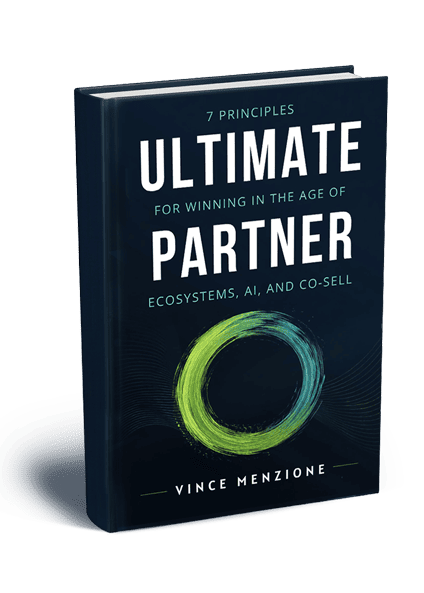
[00:06:53] Tony Safoian: I love the cover, by the way. Thank you. I just saw it today for the first time. It’s really cool.
[00:06:56] Vince Menzione: It is so cool.
[00:06:57] Tony Safoian: Are you gonna sign a copy for me later?
[00:06:58] Vince Menzione: Of course.
[00:06:59] Tony Safoian: I shall. I hope so.
[00:07:00] Vince Menzione: I’ll send you back with him. And his dad, Hovig Safoian, is an incredible friend as well. You’ve lived… Like, I feel like that book embodies the way you operated, and I never said that really to you. Maybe we’ve talked about it because you were on the podcast so many times, and we had some really great conversations as you were building the business. You were, like, 20,000,000, I think, when we first met. You were pretty small, and then you grew exponentially. You had a growth mindset. Executive commitment is where you show up in the book because this man would get on the plane no matter what.
[00:07:33] Vince Menzione: He is CEO of the company, and he would fly to Redmond. He would fly wherever he needed to be. He would also get on town halls and calls with his own team, and you’d be up early in the morning, late at night, supporting your organization in so many ways. That executive commitment showed up so many times. So I wanna spend… I’ll spend… We’ll spend a minute on executive commitment, but I also feel like you’ve lived all the principles in the book. And I know agility is one we talked about way back in the day.
[00:08:01] Vince Menzione: Like… Because you had to pivot the organization. Like, you had to grow. You grew into a Google Cloud partner when there was no… You started before there was a Google Cloud. Yep. And then you evolved the company. So talk about the evolution a little bit for people that don’t know the business, how you evolved, yeah, and the formula to success that you followed.
[00:08:22] Tony Safoian: I think that due to the fact that, you know, we were a very, very small bootstrap company, we didn’t have a brand of any kind, etcetera. We didn’t… I don’t think we knew how to raise money. I’m grateful we didn’t. But… Yeah. But, like, I’ve always recognized great platforms, you know? And Microsoft was a tremendous platform.
[00:08:54] Tony Safoian: Google was a tremendous platform. Those names and what they meant and the customers you could touch and the accolades you could receive and the value of the capabilities you could build around these platforms seemed like an obvious and smart way to stand out. And everything we did around partnerships had to do with incentive alignment.
[00:09:23] Tony Safoian: You know, I think it’s very clear and it kind of cascades all throughout the company down to your teams and employees and executive teams. Like, everything was about incentive alignment. So it didn’t take us long when we asked the right questions. Like, I think a lot of partners at the time were very traditional and their whole orientation with coming in and meeting, you know, their partners, these giant, you know, ISVs and software companies or hardware companies would be like, with a handout, you know, like waiting for, like, some incentive or something or like, what’s this latest game we can play to get the most free money?
[00:10:01] Tony Safoian: Like…
[00:10:01] Vince Menzione: We had PIE back in the day. Remember that? I don’t know if you
[00:10:04] Tony Safoian: remember that.
[00:10:05] Vince Menzione: Those stuff. That’s things.
[00:10:05] Tony Safoian: To me, that always seemed like, yeah, such a backwards orientation. Yeah. Like, our whole approach to partners is like, and anybody we’d meet, like, ‘How do you make money?’
[00:10:14] Vince Menzione: Yep.
[00:10:15] Tony Safoian: Like, how do you get promoted? How do you win? Oh, okay. Let us work backwards from that. Like…
[00:10:20] Hovig Safoian: Yep.
[00:10:21] Tony Safoian: So if we could be known as the instrument that allows the partner to win, like, we just designed a whole business model around that. And because of what technology does, that all… Everything that you guys do in the room, like, we do should make us proud because the impact we have on customers is tremendous. And the decision-makers who we sell to signed a contract to, like, make a bet on Anthropic or to make a bet on you.
[00:10:49] Tony Safoian: Like, we always had a lot of pride in what we were selling, so that part wasn’t hard. But we created these amazing chains that would just be like, everybody wins. You know, there’s no scenario in which somebody wins and anybody else could lose. Like, it just doesn’t… You know? So that’s what I think Microsoft and others found, you know, refreshing. Now the goalpost would move year over year, the targets would… And, you know, there wasn’t…
[00:11:18] Tony Safoian: But that’s where the agility comes in. Like, yeah, SQL Server is the most important thing this year. Next year, it’s something else. Yep. So, like, how do you, you know… Back in
[00:11:29] Vince Menzione: those days.
[00:11:29] Tony Safoian: How do you pivot around that? But it was important to be able to pivot around that, for sure.
[00:11:34] Vince Menzione: I remember you tapping on… We were both at a healthcare conference in 2019. I had already left Microsoft, but I was doing some work with another organization.
[00:11:43] Tony Safoian: Not to be named. They’re in the… I knew exactly who you were talking about. I’m not gonna tell anybody.
[00:11:47] Vince Menzione: No. Please don’t. There is a disclaimer in the book too, by the way. And you said, ‘We’re selling the Microsoft practice. Don’t tell anyone. Yeah. We’re doubling down. Hovig’s retiring.’
[00:11:58] Tony Safoian: Yeah.
[00:11:59] Vince Menzione: And we’re gonna double down on Google. And that was an impactful moment. I’m sure it was a tough decision to make because you had… You had built these two organizations, and some people were gonna go work for another company. But then you did double down.
[00:12:14] Tony Safoian: Yep.
[00:12:14] Vince Menzione: And then you became Google’s top partner. I mean, Partner of the Year for eight straight years,
[00:12:19] Roman (audience): I think is the number.
[00:12:19] Tony Safoian: Yeah. I think we won for seven years in a row, then I left, then we still won that year.
[00:12:24] Hovig Safoian: Yeah.
[00:12:24] Tony Safoian: So that was kinda cool. Yeah. So I still took credit for that one because I was still there 75% of the time. So I was like, that’s still mine, but that’s
[00:12:31] Vince Menzione: not my of agility, and it’s also, like, what did you do when you doubled down? Like, tell us what… How you… Because you scaled the business at that point.
[00:12:39] Tony Safoian: Yeah. Look, it’s very clear to me that you cannot be the best in the world at very many things. Like, you really have to pick your lane, and I love a niche. Like, I still love a niche. I think there’s riches in niches, is that what they say? Yeah. Absolutely. Especially at the size that we were. Yeah. If you’re like Deloitte, you can build teams that are like number one or number two in maybe 20 things, you know? But if you’re like SADA at the time with, you know, 200 people, we were roughly 200 when we split.
[00:13:10] Tony Safoian: Yeah.
[00:13:10] Vince Menzione: Were you that many?
[00:13:11] Tony Safoian: Yeah. We were about 200. I remember Roman Zork had, like, 85.
[00:13:15] Vince Menzione: Okay.
[00:13:15] Tony Safoian: And we had about 120 left. So then post you
[00:13:19] Vince Menzione: had to double down… You doubled down and started to build that other side of the house.
[00:13:23] Tony Safoian: From 120, yeah, we had to build back up. But, like, we’re like, ‘Look, we just can’t…’ It was very difficult to manage the competition on the field still despite our best efforts to divide into all that. I remember Judson called me one time and he was like, ‘Why are you at Nordstrom’s?’ And I was like, ‘Because you didn’t bring me in, Judson.’
[00:13:43] Vince Menzione: Yeah.
[00:13:43] Tony Safoian: But that was like… I was like, but they’re never gonna bring me in because it’s Microsoft. And, of course, it’s gonna be Accenture. So I could… And I saw an opportunity to be the best in the world in an ecosystem that was very small and not well understood. So it was like a big fish in a small pond or a small pond big fish. Like, we picked the small pond big fish. We didn’t know at the time Thomas Kurian was gonna come in and, like, 100x this thing. I mean, so we got super lucky with that. It happened right about the same time. The split was, like, three months from closing and Thomas starts, you know, but that decision was made a year prior to that.
[00:14:17] Tony Safoian: So we got really lucky. But, yeah, I just don’t believe you can be the best in the world at too many things. So… But it’s very important to want to be the best in something.
[00:14:28] Vince Menzione: How do you think about vision? Because you took it to an incredible exit. And when you… Did you have that… Embody that vision when you started or when you decided to double down? Or at what point did it take hold and you started executing against that vision?
[00:14:47] Tony Safoian: I think around… When I went to business school. Yeah. Shortly… So like, yeah, mid-2010s, so a few years after…
[00:14:58] Vince Menzione: USC.
[00:14:59] Tony Safoian: I remember… Yeah. Yeah. Like around… Actually around when we met, like, remember having… And I’m reading a bunch of books. I was like, I have to make a decision. And the decision was not like sell or not sell. I didn’t really ever think about selling till much, much later for various reasons. But the decision we made, me and my parents made was like, ‘Look, we’re either building a lifestyle business or building something as big as it can be built and as good as it can… Like, we’re either gonna take the entire market opportunity presented to us.’
[00:15:28] Tony Safoian: or we’re just gonna be like 30 people, 50 people, 80 people…
[00:15:31] Vince Menzione: Which is what most MSPs are. They stay at that lifestyle.
[00:15:34] Tony Safoian: Yeah. So we saw a lot of our… So the entire Google partner, you know, competitive sphere in 2010 looked like a bunch of SADAs with like 30 people, you know, 40 people, whatever. And a lot of them, like, you know, won a big contract and went… And, like, bought boats and stuff. Instead, we just hired the best people we could hire and pay people better and hire better people. And so… Because we had made that decision. Like, we were signing up for…
[00:16:03] Tony Safoian: I don’t say hell because I enjoyed it, but we were signing up for a lot of work.
[00:16:07] Vince Menzione: Yeah.
[00:16:07] Tony Safoian: It’s way harder to try to build something as big as a… Best-in-class than be like, ‘Look, I’m cool with this. I have this business. It may be worth something one day, but I kinda, like, just own my job and…’ But I, like, own my job. It’s a great business. I’m making great money, but I own my job. No. I was like, ‘No way. This is like… I can’t believe we’re blessed to be in this position to make something’
[00:16:28] Vince Menzione: Yeah.
[00:16:28] Tony Safoian: of the best it’s ever been done, like, and the biggest it’s ever been done. We have to do it. So that was the first inflection point. And with regards to sell or not sell, it was spinning off the Microsoft business. We’d only done three transactions. So one was spinning off the Microsoft business.
[00:16:43] Vince Menzione: Yeah.
[00:16:43] Tony Safoian: And that was like… It wasn’t about liquidity. It was a very distinct strategic decision. I had to go to Roman and be like, ‘Sorry, Roman, we’re selling you. But you’re very good, very valuable.’ Roman did okay. And then, you know, then we had to go global. So we bought my friend’s company in India because our customers were like… We’re like, ‘We’re only North America partners.’
[00:17:12] Tony Safoian: You know, we’re only in North America. Isn’t that cool? And our global, like, new enterprise customers were like, ‘You’re insane. You’re out of your mind. What are you talking about? Like, we have offices everywhere. You don’t have anybody offshore?’ So I sent my dad to Armenia to open that office. I remember
[00:17:26] Vince Menzione: that.
[00:17:26] Tony Safoian: that we bought… Then we had to buy in India, which is amazing. And then, of course, there was the last sale. But what happened in around 2020-ish, obviously, we had this great acceleration. But by that point, can you imagine, like, in a matter of two years, like, 2018, ’19, nobody believed Google was even serious about cloud.
[00:17:45] Vince Menzione: That’s right.
[00:17:45] Tony Safoian: By ’21
[00:17:46] Vince Menzione: A distant third at that point.
[00:17:48] Tony Safoian: Everybody and their mother was starting a Google business.
[00:17:50] Vince Menzione: Yes.
[00:17:50] Tony Safoian: Right? Accenture, Deloitte, PwC… Like, anybody, every GSI. So every customer we were in, we used to get picked for being, you know, the best, and now we were getting not picked because there was an Accenture contract, you know, already there. So we’re just gonna use those guys even though they were, you know, they didn’t know, you know, if they could deliver. They’re like, ‘I’m not gonna get fired if I choose Accenture.’ So, like, we were like, ‘Oh, my God. This is starting to happen. It’s mainstream now. I love it.’ And we have two choices.
[00:18:19] Tony Safoian: We’re either gonna raise a tremendous amount of money and try to, like, just outgrow it, you know, just buy everyone in the world who does… Who did Google and be the platform. And we tried to do that, and then it was very difficult to do that in ’22, yes. April ’22, if you remember…
[00:18:35] Vince Menzione: Coming out of COVID and… Yeah.
[00:18:36] Tony Safoian: April ’22, like, the whole world froze as far as, like, the debt markets, and interest rate data came out also, and then sort of like, ‘Okay, so we can’t raise money.’ So then we have to like, ‘Okay, then we have to then go be part of a platform.’ So we have to find a buyer in which we can continue to do what we love at a parent company who gets what we do, and that’s where… That’s how we ended up with Insight. But people have called me an entrepreneur throughout time, and they…
[00:19:07] Tony Safoian: Sometimes I still get… I’m like, ‘I’m not an entrepreneur. I was not an entrepreneur. I was a builder, and I was an operator. You know?’ And I still feel that way.
[00:19:18] Vince Menzione: So I wanna talk about two things. One observation is you always hired great talent. You said this a little bit earlier that… So talk about that because a lot of leaders don’t. Like, you found people… You paid probably more than you could afford at the time, I will say, but you invested in the right people in the right roles.
[00:19:39] Tony Safoian: Yes. I just saw Joseph, and he was like, ‘Do you remember when you hired Miles?’ Yeah. I was like, ‘Yes, I do, Joseph.’ I felt like I won the Super Bowl that day when I hired Miles. I hired the top GCP engineer on the planet.
[00:19:51] Vince Menzione: Yep.
[00:19:52] Tony Safoian: And I had to pay him more than I paid myself.
[00:19:54] Vince Menzione: Yeah.
[00:19:55] Tony Safoian: And I think that’s the hard part founders can’t get over like, oh my god, like, how can somebody at the company make more than I make? It’s like, no, they should. Like, your top salespeople should make way more than you make. And, you know, if you… Again, if you wanna build a lifestyle business, don’t do that. But if you’re trying to make a business that’s best in the world, you… My entire executive team was the best at what they did. Some were able to grow with me and become as good as we needed, you know, at the time, and every year was harder and I needed to be better at what they did.
[00:20:32] Tony Safoian: And others we had to get from the outside. But, yeah, I had to have the best talent, and they are expensive. So instead of raising money and giving, you know, a bunch of the company away to private equity or anybody else, we gave, like, 20% of the company to our people. That’s another way you recruit and retain. And so that felt really good.
[00:20:51] Vince Menzione: You know, I talk about how the CEO is the best CPO, channel partner leader. You had a partner organization. You had great leaders. You mentioned you hired great people. But you were always the chief partner officer in my mind, and you took that role. How did you balance those two, first of all? And then what does being a CEO and being the chief partner officer mean to you?
[00:21:13] Tony Safoian: I think every CEO should be spending their time in the highest value activity of that time spent. So the partnerships were the most important thing next to our people, of course, and I spent a lot of time with our people. I didn’t run HR, above my skill set, but that was the most important place to be every time that I was there.
[00:21:44] Tony Safoian: It was where the best ideas came from; it’s where relationships were built. It was clear to me. I mean, eventually towards the end, I was able to hire someone that was better than I am at understanding these things. Towards the end, I brought in Michelle again from Google to help me be like a VP of partnerships. Because I just, you know, it was getting complex. We were kinda selling the business. There’s all this stuff going on. But until the very, very end, like, that was the best use of my time.
[00:22:19] Tony Safoian: And most importantly, and I think Google and Microsoft got that, is like, if there was something we needed to do for the partnership, when the CEO is coming back and saying, this is what we’re doing, it’s not much of a debate. Yep. You just do it. Because you have the resource allocation control to just, like, make it happen. It’s not like some partner person has to come back and then go get the funding for this thing and convince the CFO and then go convince the CEO, and, like, six months later, you might… Maybe you did the thing.
[00:22:45] Vince Menzione: Yeah.
[00:22:45] Tony Safoian: You know, I would come back and, like, we would do it next week. Roman remembers, like, now we’re going left. And I’ll be like, okay, we’re going left.
[00:22:52] Vince Menzione: You also did some innovative things before their time. Like, you started doing a marketplace before Google did their own marketplace. Right? You were building your own infrastructure. You were creating more value to these ISVs. They would do their GCP commit through you, and then you would provide a sales team to help support them, which is very unusual in the role that SADA was in.
[00:23:14] Tony Safoian: I think it was only because so many of Google’s first, you know, thousands of customers were ISVs themselves. They were digital natives that, like, we would be servicing them and helping them and selling to them and working with them. And they were like, no. Like, we need to grow. And we’re like, wait. If you grow, we grow? Yeah. Like, if you grow, you’re gonna spend more? Again, incentive alignment, it makes perfect sense. Like, yeah, we built sales teams for them. Like, it was hard. It was hard.
[00:23:43] Tony Safoian: As Justin knows, who’s, you know, who’s built a platform around this now, who used to work at… But again, it was just incentive alignment. Like, it was a no-brainer. Yeah.
[00:23:53] Vince Menzione: So the story goes, Dee, when I had you and Dee on the podcast, Insight was interested in the… They were Microsoft… Big Microsoft shop. They wanted to go Google. They went to a Google executive, and they said, who all should we look at?
[00:24:08] Tony Safoian: Yeah.
[00:24:09] Vince Menzione: And that executive said one name, four letters, SADA. And it didn’t go very much further than that. Right? I mean, it seems like the process didn’t take a lot of time.
[00:24:20] Tony Safoian: Yeah. I mean, this part’s a little fuzzy for me. So I actually brought somebody to, like, tell this part of the story and, like, surprise you today. So Dad, if… Where’s Hovig? I’ve been hiding Hovig from you this whole time. Where is he?
[00:24:34] Vince Menzione: Oh my god. Are you kidding?
[00:24:36] Tony Safoian: Where are you hiding him, John? Oh. Hey, Dad.
[00:24:41] Vince Menzione: Oh my gosh. You’re gonna make me really cry now. Oh my gosh.
[00:24:46] Tony Safoian: So great. Surprise.
[00:24:48] Vince Menzione: So great.
[00:24:49] Tony Safoian: Italians and Armenians both kiss each other on their cheek. Just… It’s totally normal.
[00:24:53] Vince Menzione: Oh, jeez. Hovig, so great to see you, my friend. Oh, my goodness. Thank you for coming. Thank you for making the trip. So Hovig Safoian, for those of you who don’t know, the other half of SADA, actually, I think, truth be told, you started the company first
[00:25:13] Tony Safoian: I did.
[00:25:14] Vince Menzione: While he was still in
[00:25:15] Hovig Safoian: in school.
[00:25:17] Vince Menzione: So great to have you join us today.
[00:25:19] Hovig Safoian: No. It’s my pleasure. Hi, everyone.
[00:25:22] Tony Safoian: By the way, he didn’t actually retire after the Microsoft sale like I was hoping.
[00:25:33] Vince Menzione: But… And Annie still worked as long… Is Annie here too? No.
[00:25:38] Tony Safoian: Annie had to take the kids to school today and help line up.
[00:25:42] Vince Menzione: Such a great surprise.
[00:25:43] Hovig Safoian: Unbelievable. So thank you so much.
[00:25:45] Vince Menzione: Thank you.
[00:25:46] Hovig Safoian: This is an amazing opportunity. Thank you. I appreciate it. We owe a lot to you from day one when, you know, excitement started. You actually helped us tremendously when we needed it the most.
[00:26:00] Vince Menzione: Thank you.
[00:26:00] Hovig Safoian: When we needed it the most, and that’s what really matters. So I appreciate it.
[00:26:05] Vince Menzione: Thank you so much.
[00:26:06] Hovig Safoian: Well, you
[00:26:06] Vince Menzione: were the first guests on the podcast. I think you… Tony came on five-plus times, and I never forgot our meetings, our early meetings and the support.
[00:26:17] Hovig Safoian: Great meetings…
[00:26:18] Vince Menzione: Always talk about trust. And you two… Your organization, you exude it. And, you know, it shows in so many right ways. So it’s so great to have you here.
[00:26:28] Hovig Safoian: So the outcome you were looking for… You and your friends were looking at, like, sitting close at dinner time and looking in the eyes and going, in your mind, as you’re saying, ‘Can I trust these guys really or no?’ Yes. And that’s the vibe I got, and that was the most important thing at that time. So thank you for trusting us. Thank you.
[00:26:50] Vince Menzione: Well, it was a beautiful dinner,
[00:26:52] Hovig Safoian: by the way. We had
[00:26:53] Vince Menzione: a great time. I think you had just gotten your first Tesla. Remember a Tesla back in the day when it was an early Tesla.
[00:26:59] Tony Safoian: I should have just bought the stock instead of the car, but…
[00:27:03] Vince Menzione: It was
[00:27:03] Hovig Safoian: a nice start. Yeah.
[00:27:04] Vince Menzione: Was a
[00:27:04] Hovig Safoian: nice. So fast forward. So Insight called Google and asked for two names, not one name. They asked for two names.
[00:27:15] Vince Menzione: Oh, they did.
[00:27:16] Hovig Safoian: And Google said, SADA and SADA.
[00:27:21] Vince Menzione: I never heard that side of
[00:27:22] Hovig Safoian: the story. That’s amazing. So, you know, I mean, we got fortunate a lot of times, a lot of different times in the journey, one of which is meeting you, of course, and several others. Working hard is one thing, and, you know, you have to get lucky along the way.
[00:27:41] Tony Safoian: You have to get lucky along
[00:27:42] Hovig Safoian: Meeting people, the most important thing,
[00:27:44] Vince Menzione: great people. You built a great culture. And John, who’s sitting in the front, also worked at SADA for four years before tapping me on the shoulder as you were selling the company and said, ‘I think I can help you, Dad.’ And he made his transition to support us.
[00:27:58] Tony Safoian: I warned him. I warned him that it’s not easy to work with your dad.
[00:28:02] Hovig Safoian: Yeah. Tony’s giving him some pointers. Yeah.
[00:28:06] Vince Menzione: Well, he’s doing an outstanding job. But tell me… Talk about that for a little bit. A family-run business, and maybe there are some… I know there’s some MSPs that own their own businesses, people that have started their own companies, entrepreneurs in this room. But tell me what that journey was like together.
[00:28:22] Hovig Safoian: So at the end, when we were signing paperwork with Insight, Insight’s CEO, we’re having dinner. Insight’s CEO pulling me aside and Annie and me and Annie and her, and she was asking, ‘So all these years you guys worked together, how come you didn’t kill each other?’ Family works together closely. You go to the office, work long hours, and then go home and it continues, and then, you know, the weekends get together, hang out.
[00:28:51] Hovig Safoian: So semi worked out, you know. Tony was in one direction, I was in the opposite direction, and Annie was in the middle. She was always like moderate.
[00:29:03] Vince Menzione: Peacemaker, moderate. Peacemaker, yeah.
[00:29:06] Hovig Safoian: That’s how it was, you know. My
[00:29:07] Tony Safoian: My favorite part of the last few years was like I used to tell my dad like, ‘Dad, we just won this award. Like, we’re doing so great. You know? I think the business is like… It’s quite valuable.’ He’s like, ‘Shut up. It’s only worth what somebody’s willing to pay you for, you know.’ We would disagree a lot, but it was never about money, which I think is important.
[00:29:32] Vince Menzione: It is important.
[00:29:33] Tony Safoian: And we’d disagree about strategy, he’d, you know… Now he says like, I was right about everything. But he’s like, ‘You’re so generous and you’re so… blah blah blah.’ But it’s hard, but when it works, obviously, it’s like the best, you know, partnership you can have is family, and I had other family members work, you know, in the business when I could, which is difficult, but it’s like, why not create value for one another, you know?
[00:30:01] Tony Safoian: I had to make a decision, .com crash. I was working at a .com, finishing school. I deliberately moved back to LA to work with my parents, you know, because it was sort of a supernatural thing as an only child. But, yeah, I mean, it’s not easy, but we ran it like a warm-hearted, very professional place.
[00:30:23] Vince Menzione: Very cool.
[00:30:23] Tony Safoian: It wasn’t like a hokey… We didn’t want to be like a hokey family business.
[00:30:27] Vince Menzione: Not at all. You know, we’re a highly professional organization. Great to work with. Great organization.
[00:30:31] Tony Safoian: But I knew that he would never stop working till we sold the business, you know? Like… So his last job was chairman of the board. He got fired immediately post-acquisition. Because when you have no board, like, you can’t have a chairman, you know. So when they dissolved the board, like, that got fired.
[00:30:52] Vince Menzione: Did you stay on for
[00:30:54] Tony Safoian: I stayed nine months. Okay. They kept Annie the longest.
[00:30:58] Hovig Safoian: Yeah. There you go.
[00:30:59] Tony Safoian: Annie who, you know, knew the balance sheet and treasury functions better than anyone. I think they… When she finally left, they had to hire three people to replace her. And the inside joke and outside joke was like, everyone always knew Annie was always the most important part of the business.
[00:31:16] Vince Menzione: That’s very cool.
[00:31:17] Tony Safoian: That’s why they kept her the longest.
[00:31:18] Vince Menzione: Very cool. Yeah. I… You know, I don’t… I mean, I don’t know what else to talk about other than I do want to open it up because we have some friends and former employees here, and there might be a couple of questions.
[00:31:31] Tony Safoian: There’s also a party we’re keeping
[00:31:33] Vince Menzione: them from. So… You’re coming to the party, right? Are you guys coming to the party? When’s the plane leaving?…
[00:31:38] Tony Safoian: Flying out. Yeah. Alright. But we’re gonna record something, I think, real quick. Yeah.
[00:31:42] Vince Menzione: Yeah. We are.
[00:31:55] Roman (audience): One, one.
[00:31:55] Vince Menzione: Oh, wait. I’ll ask one question before Roman goes. Yes. So we did… That first podcast, you made every employee listen to that. Is that true? Every employee had to listen to the podcast interview we
[00:32:09] Tony Safoian: did. Assigned work. We also had it as part of onboarding. Yeah.
[00:32:14] Vince Menzione: Yeah. That’s crazy.
[00:32:15] Roman (audience): Well, that’s exactly what I wanted to comment.
[00:32:18] Vince Menzione: Go ahead.
[00:32:18] Tony Safoian: Go ahead.
[00:32:18] Roman (audience): I think I can probably allow myself to get a little bit more, like, not… Well, not personal, but to really express my, you know, excitement listening to this story. And I do want to say that the Safoian family and SADA journey were the factor that actually shaped our path and journey.
[00:32:48] Roman (audience): You guys impacted a lot of lives, personally and professionally, and it’s just amazing. And that’s part of the reason where I am today, where my company is and our people. But, Vince, you are right. Tony was assigning us your podcasts as training to learn how to be the Ultimate Partner or a better partner, how to better work with hyperscalers.
[00:33:19] Roman (audience): And on the stage, we actually have my longtime mentors who shaped me personally and professionally, which I’m really, really thankful for. And what I want to just express is it’s just amazing to see where we are in 2026, and we have this amazing community here, which I really, really appreciate and cherish. And it’s just amazing what you created, Vince.
[00:33:49] Roman (audience): And
[00:33:49] Vince Menzione: Thank you.
[00:33:49] Roman (audience): The fact that you have Tony here and Hovig surprised you is just amazing. And… Yeah. Thank you. Thank you. I’ll try not to get emotional, but… Yeah.
[00:34:05] Tony Safoian: This is awesome.
[00:34:06] Hovig Safoian: Truly amazing what you’ve built. Thank you. This is awesome. Amazing. Absolutely amazing.
[00:34:11] Vince Menzione: And it’s the end of the day, so… You know, we have some other leaders in the room. I’m just… You have so many great insights. I got to observe your organization for so many years and watch the path. This is a very interesting time right now. It’s changed quite a bit since you exited. And we started the day with OpenAI. We finished the day with Anthropic before you came up. What would you say to these organizations here? Like, how do they…
[00:34:39] Vince Menzione: You always talked about agility and skating to where the puck is going, but also you said… In fact, you helped shape the agility principle because you told me, like, you have to listen intuitively and do things maybe aggressively, not quite knowing what’s gonna happen, but anticipating that those things are gonna happen. So how would you tell the people in this room how they need to think about the future?
[00:35:07] Tony Safoian: Here’s how I do it. So all the other stuff, everything in Vince’s book, *How to Partner*, instead of all, like, that… That’s evergreen. I think that never changes. But, look, when you don’t control the technology, the influence you have is the business model. So we have transformed the way technology is delivered many, many times in 24 years. We did it… I can’t claim we invented managed services in 2002.
[00:35:36] Tony Safoian: There’s no real evidence of that. I looked at Wikipedia. It didn’t have an entry for that. But I think we probably did.
[00:35:41] Vince Menzione: Too late, by the way.
[00:35:43] Tony Safoian: Can somebody go update that page, please? Tony invented managed services. But, like, break-fix was a stupid model to me in 2002. Like, wait. I have to wait for it to break and then fix it? But then, like, you’re down and then I have to rush across town to… Like, that’s so dumb. Why don’t I just…
[00:35:59] Vince Menzione: Pay by the hour or whatever?…
[00:36:00] Tony Safoian: Going down. Right? Like, that’s a better model. Yeah. So that was, like, V1. There were many other things along the way, including the way we solved consumption or whatever. So if I was in today’s world… I actually just talked to a nonprofit founder, which I do just a lot of, like, volunteer work these
[00:36:16] Vince Menzione: days. Nice.
[00:36:17] Tony Safoian: He’s like, ‘There’s like a $60,000 Salesforce proposal in front of me.’ I was like, ‘That’s stupid. Don’t do it.’ Look, you can’t deliver services the same way. You can’t charge the same way. Like, nobody… Like, you can’t obfuscate how long something took to take. It used to take six months. You can do it in a week now. So, like, what are you gonna charge? Like, it’s just such a wild, wild world.
[00:36:46] Tony Safoian: But anytime there is this level of disruption, I mean, it’s so ripe for creating new business models and opportunities. And the way I would totally do it—I know services, I know there’s a bunch of ISVs, various types—but I would absolutely figure out the hardest thing to figure out forever, which is: how do you charge for services based on outcomes and value? How do you do it? How do you make it work? How do you align it with customers so that it does work and can’t be gamed and whatever?
[00:37:18] Tony Safoian: Like, that was always the panacea. And I got this little inspo from Mad Men-era ad agencies. This is how they used to charge: when they did an ad for Volkswagen and they sold a million Volkswagens, they would get a huge check, you know? Absolutely. I think that’s fair. Yeah. You know? I don’t think it’d matter… Like, how many tokens did we use and what was the…
[00:37:48] Tony Safoian: Like, how… Did it take eight people or three people? Did it… Was it done onshore or offshore? Like, who cares?
[00:37:55] Vince Menzione: Who cares anymore?
[00:37:56] Tony Safoian: So that’s what I’d be obsessing over figuring out, because that would be completely transformational. And very few people could compete with it if you did figure it out.
[00:38:05] Vince Menzione: Hovig, anything to add there?
[00:38:06] Hovig Safoian: I seem to agree with him. Yeah. I agree. Well… I agree with him.
[00:38:10] Tony Safoian: Well, I’m always right. So… That’s a good bet.
[00:38:14] Vince Menzione: Yeah. So…
[00:38:15] Hovig Safoian: Being fanatical about customers really always works in any situation, with any technology, and in any scenario, at any time. It’s really about the customer.
[00:38:31] Vince Menzione: Yeah.
[00:38:32] Hovig Safoian: So being fanatical, obsessed about customers’ success always seems to be a good alignment. So that’s what I would say.
[00:38:42] Vince Menzione: Customer always at the center of the conversation.
[00:38:44] Hovig Safoian: Yes.
[00:38:44] Tony Safoian: And
[00:38:45] Vince Menzione: you’ve always lived that. I think we have one more question over here. Yes. Hi. Thank you for sharing. I actually love… I’m the chief partner of my company, so I appreciate it. I’m gonna get that in writing. It’s the most important role for my CEO. 100%. My question for you is you had three great inflection points and really great success. If you had to look back, were there any failures or lessons that you learned on that journey that you would have done differently, or did everything happen as it was supposed to in your mind?
[00:39:16] Tony Safoian: There was lots of failure, tons of failure. But the way that we thought about… Like, you can’t be on the cutting edge if you’re not willing to fail. Like, when Microsoft released products that didn’t work… No offense, Vince. None taken. We would be like, ‘Sign us up,’ because we have a high degree of tolerance for pain and uncertainty. Yep. You know? So that means, like, you’re gonna fail a lot. But we would think of it as portfolio management.
[00:39:48] Tony Safoian: We would make bets that were small, and any number of them could fail, but unless you did it, it’d be impossible to know if it would or would not fail. But the way we did it, because we were organically funded, I felt like there was something to try. I wouldn’t put 30 people on it. I put one. And I’d be like, ‘You figure this out. This is either something or nothing.’
[00:40:16] Tony Safoian: We’ll find out in six months, but you own this, and so I dedicated people making a lot of bets. So we tried Voice over IP as a business on Asterisk, which is like voice was turning into data, and that failed miserably. We didn’t sell a single Google Search Appliance. We were like the first… We didn’t realize…
[00:40:36] Vince Menzione: Did anyone want to sell
[00:40:37] Tony Safoian: anything? 6%. Tons. Public sector bought all of them. But our average customer had like six employees and they’re like, ‘They want to pay $20,000 to search and find their files?’ It’s kind of… Probably should have been obvious, but yeah. Lots of things failed. We didn’t make any existential bets, and the core businesses always funded experimentation, and I think that’s critical. The moment you stop doing that, it’s very dangerous.
[00:41:06] Tony Safoian: Awesome.
[00:41:08] Vince Menzione: I think we’re being told to wrap up
[00:41:10] Tony Safoian: because of the party.
[00:41:11] Vince Menzione: I could stay here all night with you all.
[00:41:12] Tony Safoian: Weren’t too long?
[00:41:13] Vince Menzione: I’ll fly back with you. How’s that now? Just kidding. We got tomorrow. We got a busy day tomorrow. I can’t thank you enough. I don’t know where to start.
[00:41:21] Tony Safoian: Only for you, Vince. Only for you.
[00:41:26] Vince Menzione: Thank you for watching. Thank you for listening to this episode of the Ultimate Partner Podcast. You can find us at theultimatepartner.com or on YouTube at Ultimate Partner. Thanks again.